 A next-gen video review platform.
See how Oddbox reduced their CPA by 46%
Real customers, filmed in their own kitchens, cut into the ads that brought Oddbox their cheapest customers yet.
Reviews at scale, on tap.
Challenge briefs go out to reviewers and pull back a continuous stream of authentic, first-party video, not a one-off shoot you have to keep re-commissioning.
- Themed challenges keep footage flowing month after month
- Real customers, real kitchens, real language
- Material for both creative and data
Your reviewers tell you who to target.
Every reviewer gives a rating and is organised into audience segments. The motivations that show up most and score highest reveal which audiences are worth chasing, before a penny of spend goes live.
- Reviews grouped into named segments you can target on Meta
- The pattern becomes your targeting map
Pick the most engaging hooks.
Within each segment, choose the reviews and quotes that tell the best story and land the strongest hook. The lines that make someone stop scrolling because they recognise their own reason to buy.
- Hand-picked for narrative and hook strength, per segment
- Quotes mapped back to the exact video moment they came from
- The shortlist that becomes your creative
"What I love about Oddbox is everything inside has been rescued fresh from the growers."
"My kids eat so much more fruit and veg now — I don't have to fight them on it."
"It's coming straight from the farm to my door."
Clip the reviews, build the assets.
Edit clips into to their strongest moments. The quotes become paid-social-ready statics alongside the video edits.
- Video reviews clipped to hook-first vertical cuts
- Quotes combined with product imagery and turned into static assets
- Authenticity preserved — creative comes straight from the reviewers
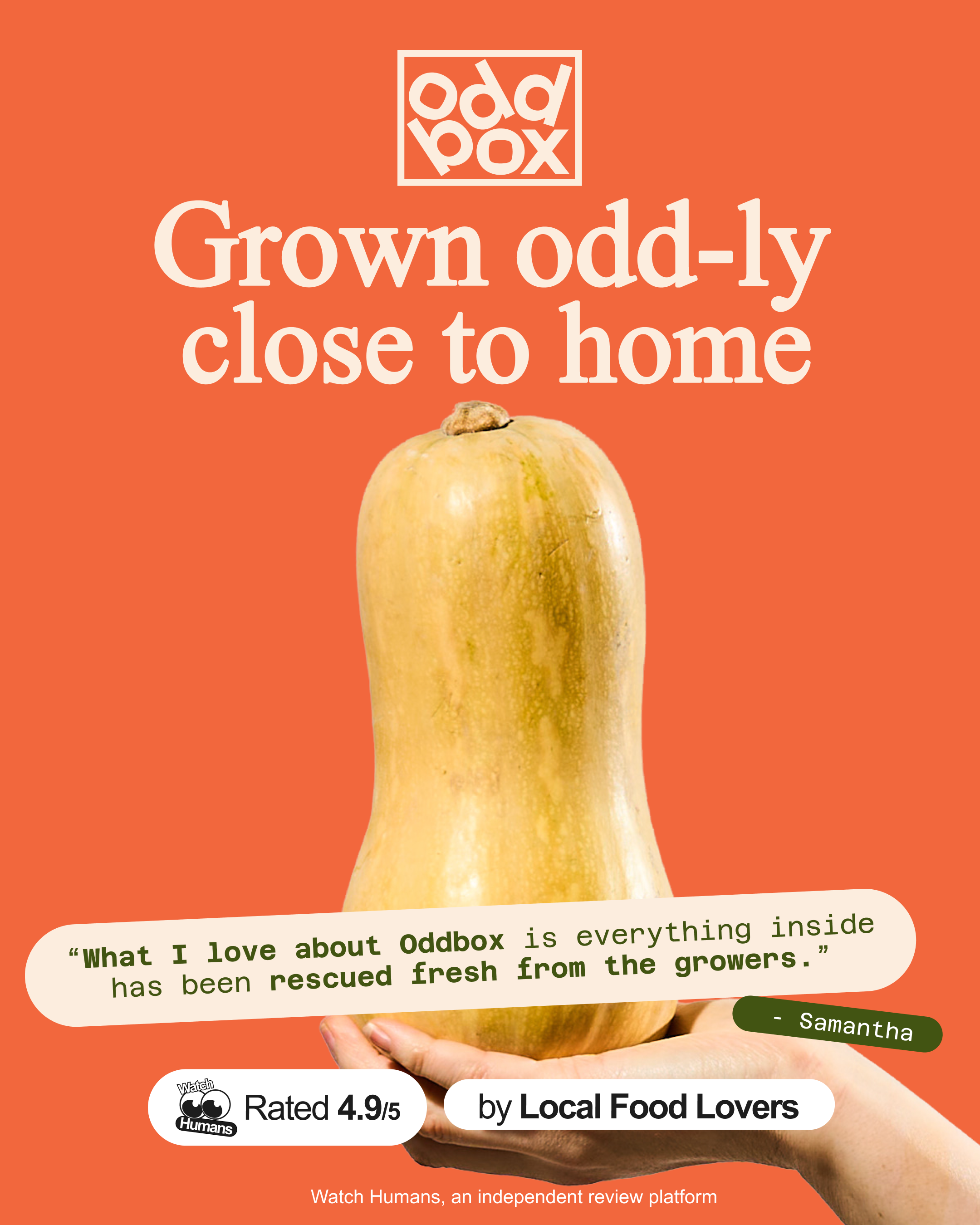
Add the stickers that reduce CPA
Segment-aligned score stickers go onto the creative, placed at the moment it lands hardest. In the Oddbox case study, the sticker versions didn't just look sharper. They performed.
- Stickers matched to each segment's proof point
- Placed within the Meta safe zone, off the reviewer's face
- Tested head-to-head against clean, no-sticker cuts
Results that write the next brief.
The high performers don't just get reported; they decide which segments to scale, which to cut, and what the next round of challenges should ask for.
- Per-creative and per-segment reporting
- Learnings loop straight into the next challenge brief
Paid influencers and UGC creators just weren't converting like they used to. Working with Watch Humans meant getting a wide range of real reviewers and meant we could target several different cohorts properly instead of pointing one message at everyone. Our best performing cut came in 46% below our business-as-usual CPA, and one creative went on to drive 32% of all purchases in the account at a CPA 12% below the account average. Less creative fatigue too. It's given us a new benchmark for what effective, human-led storytelling can look like in paid.
